Cincinnati Performances
Before Taos: a private chamber-music series Helene Wurlitzer hosted at her own home, 1935–1943.
This page isn't part of the sheet-music catalog — it's built from a separate document, "Helene Wurlitzer list of home performances," which the numbered piles deliberately exclude. It turns out to be one of the more revealing things in the whole collection: a typed record of a private chamber-music series Helene ran at her Cincinnati house, decades before the Taos Foundation existed.
What the document is
The first page sets the scene plainly:
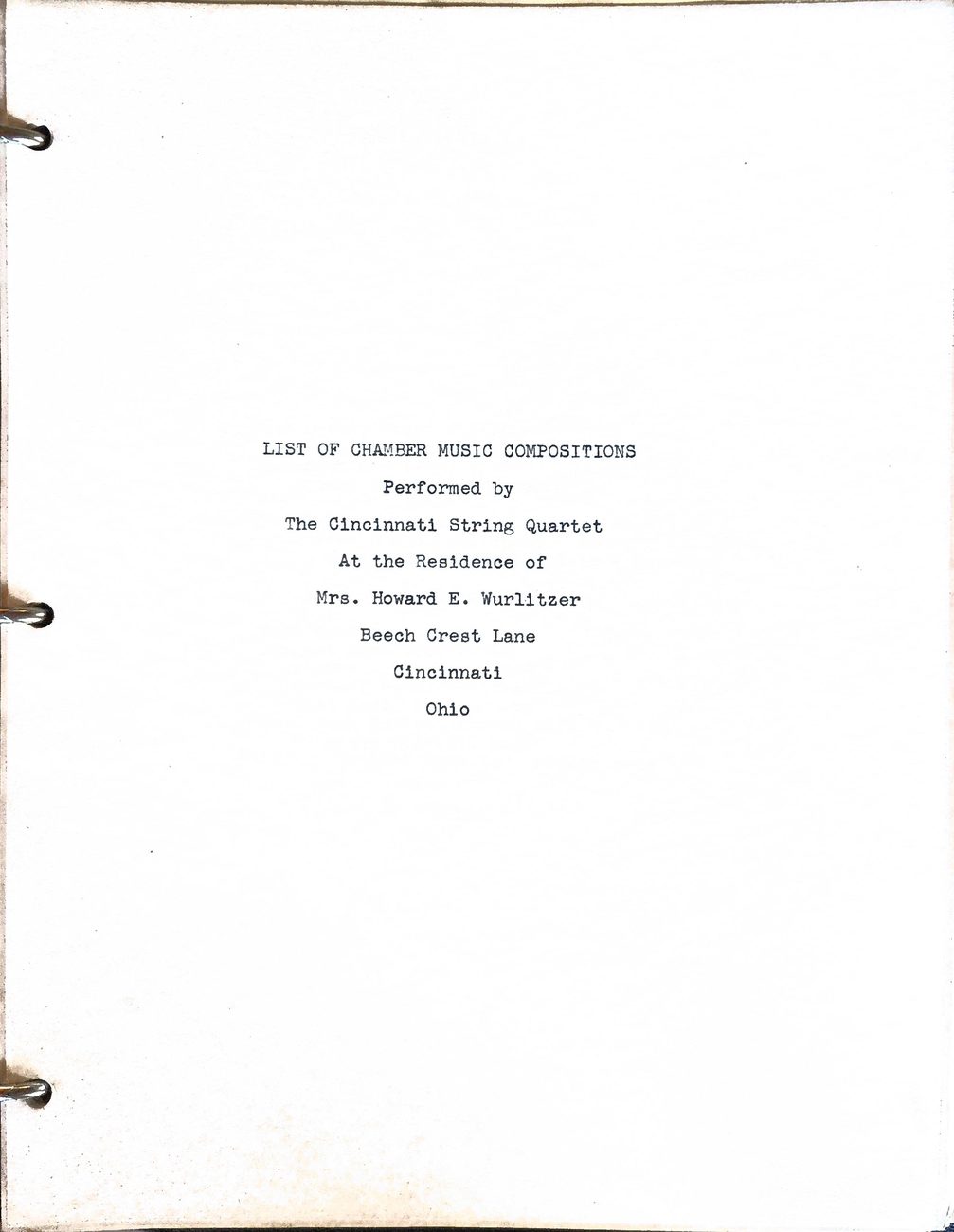
"The Cincinnati String Quartet," performing regularly at the residence of Mrs. Howard E. Wurlitzer — Helene, under her married name — on Beech Crest Lane. This lines up with the Wikipedia biography's account of her Cincinnati years: a strong supporter of the Cincinnati College Conservatory of Music, the first woman on its Board of Regents, deeply embedded in the city's music scene well before she ever saw Taos. The pattern of hosting and supporting musicians in her own home, which the Foundation would later formalize in New Mexico, was already well underway here.
Who played
The core quartet is named on the second page, along with a run of violists who rotated through on specific dates, and a long list of additional musicians "assisted by":
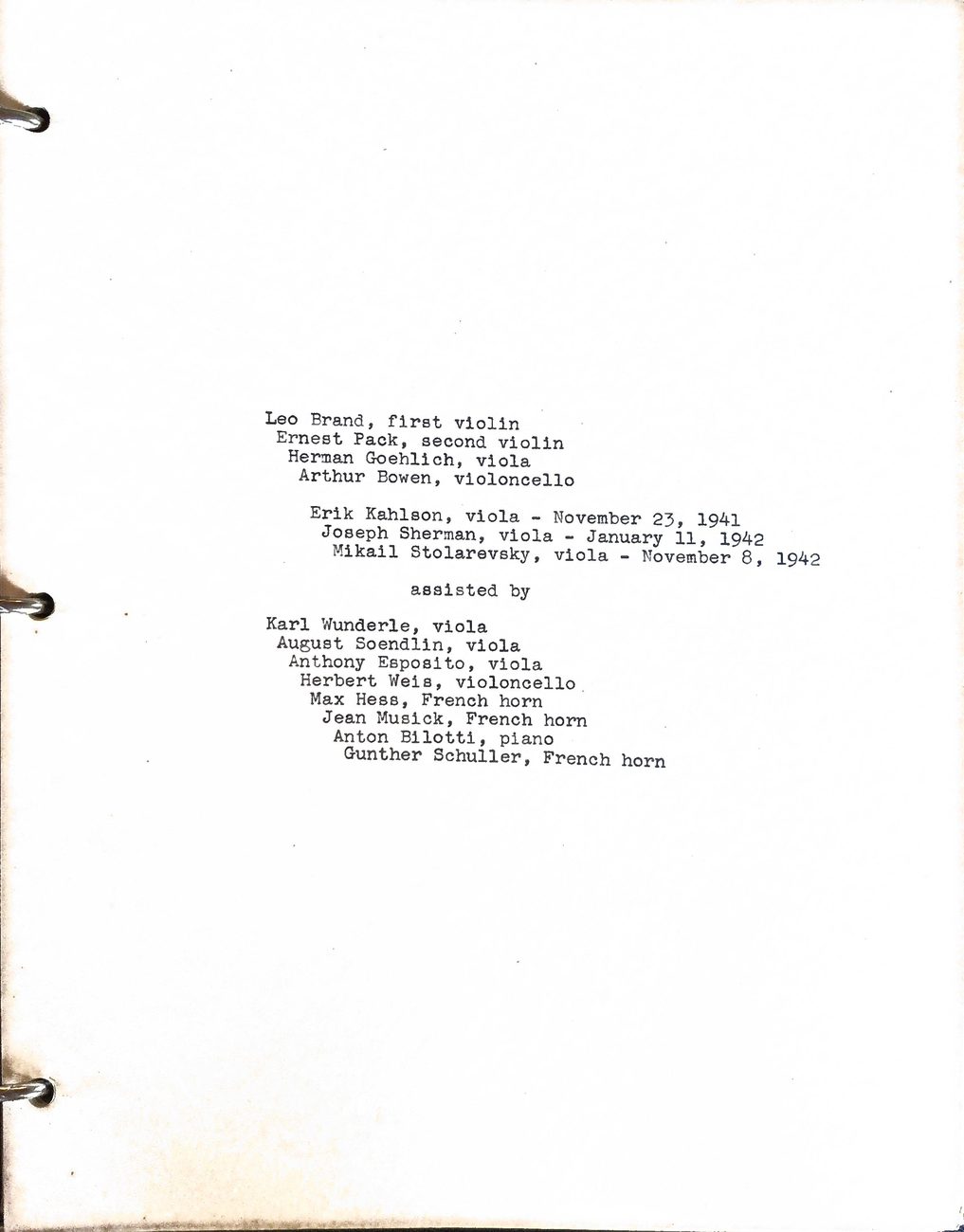
One name on that guest list is worth flagging on its own: Gunther Schuller, French horn. If this is the same Gunther Schuller (1925–2015) who went on to a major career as a composer, conductor, and horn player — National Medal of Arts, MacArthur Fellowship, president of the New England Conservatory — the timing fits: he became principal horn of the Cincinnati Symphony Orchestra in 1943, right at the tail end of this series' run, and would have been a teenager active in Cincinnati's music circles in the early 1940s, exactly when the substitute-violist dates on this page (November 1941 through November 1942) place these performances. It's not confirmed — the document gives no other identifying detail — but it's a strong enough coincidence to be worth someone checking against Schuller's own biographical record.
The core repertoire
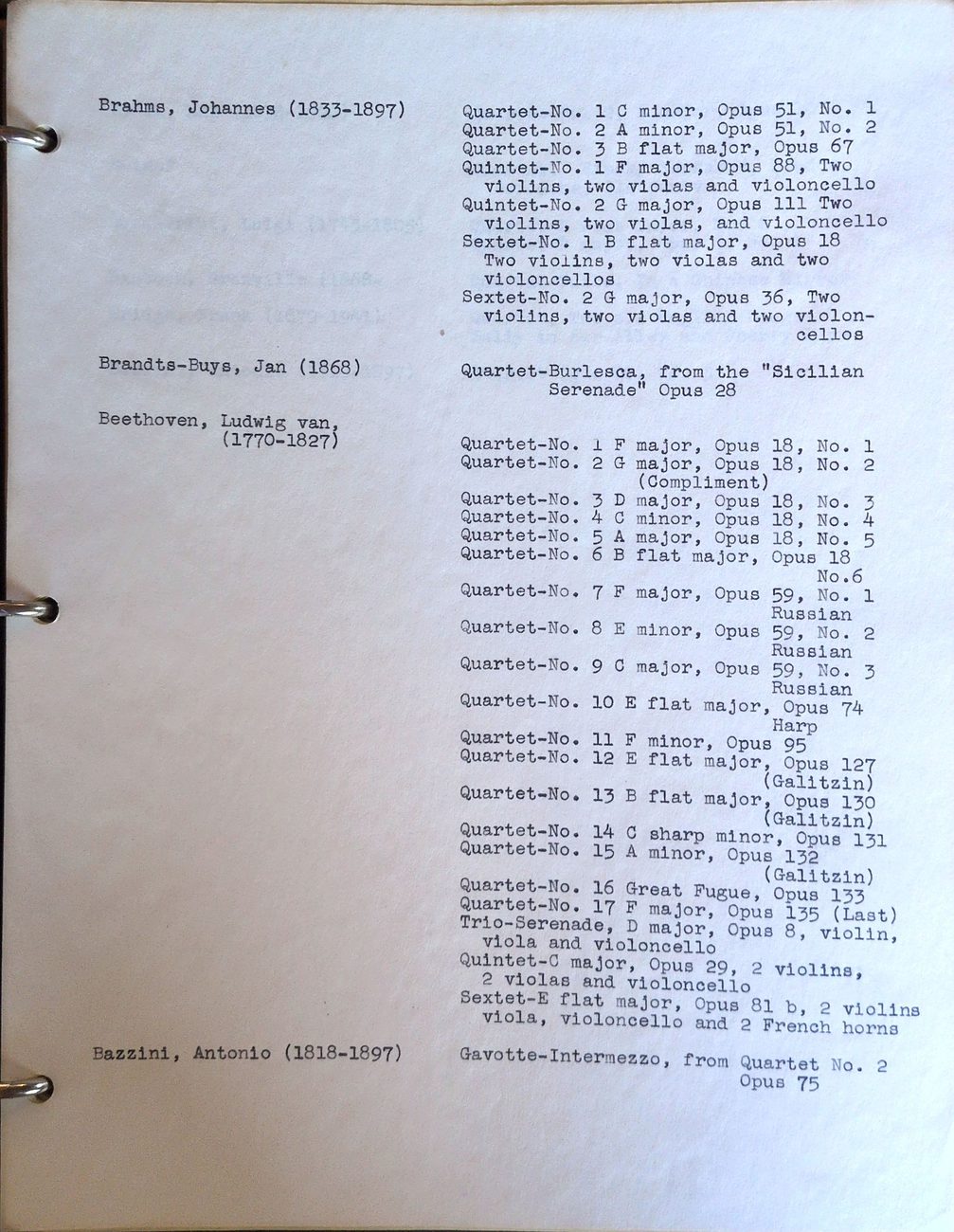
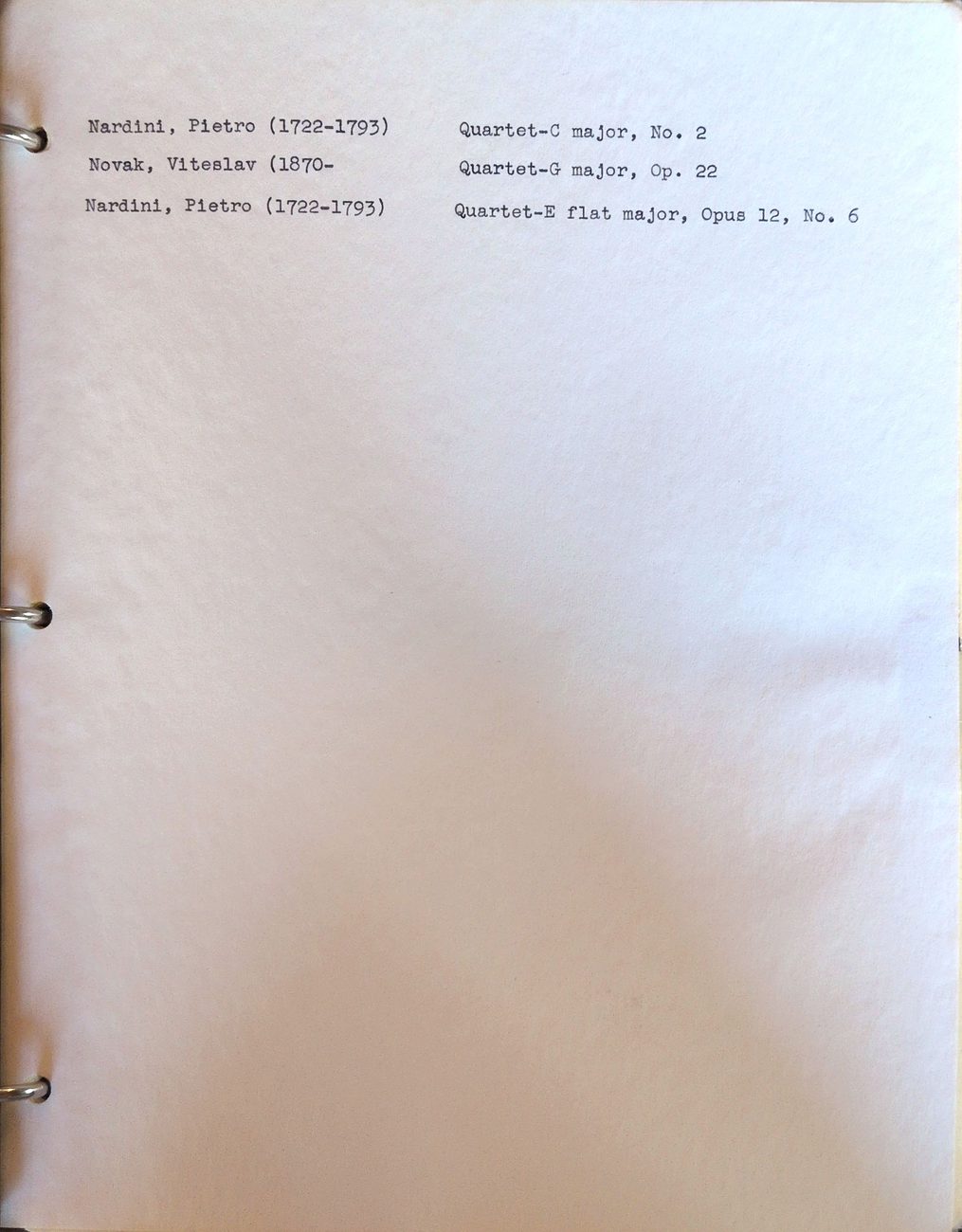
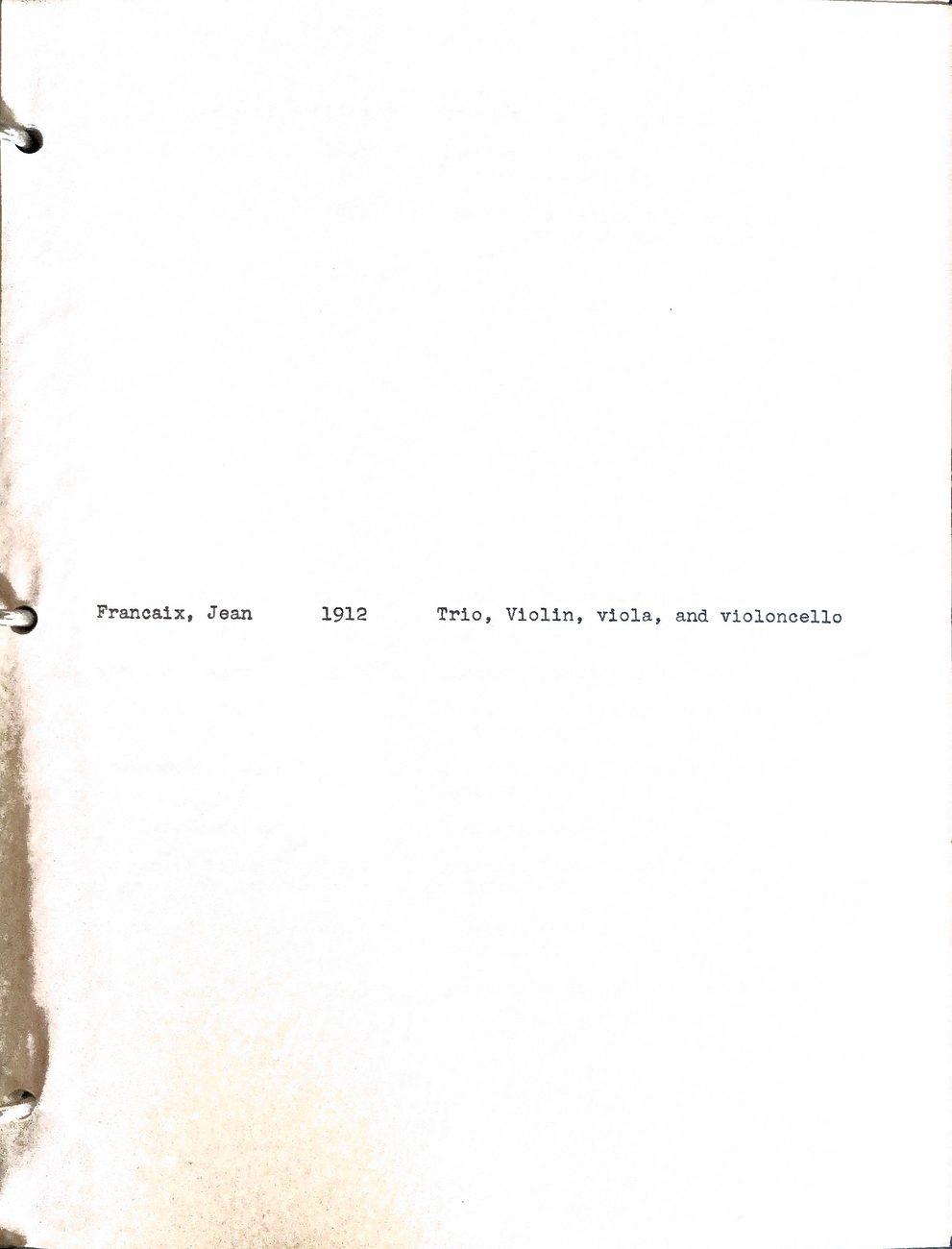
Most of the document is an alphabetical catalog of everything the quartet played at Mrs. Wurlitzer's, composer by composer, and it's extensive — roughly twenty pages running from Renaissance polyphony to living composers. A few things stand out:
- Essentially the complete Beethoven quartet cycle is listed, Op. 18 through the late quartets, including the Grosse Fuge and the Galitzin-dedicated quartets — alongside his trios, the C major quintet, and the horn-and-strings sextet.
- Brahms's complete chamber output for strings appears too: all three quartets, both piano quintets, both string sextets.
- The Bela-f Quartet — the same 1888 collaborative piece by Rimsky-Korsakov, Liadov, Borodin, and Glazunov (spelling publisher Belaieff's name in a musical theme) found in the physical sheet-music collection — is listed here too, a direct cross-confirmation between what the family owned and what actually got performed in their home.
- A handful of local/regional names sit among the standard repertoire — Martin G. Dumler, Sigmund Culp, Dale Dykins — almost certainly Cincinnati-connected composers rather than internationally known ones, the kind of detail that would mean something to a local music historian even if it means little to a general listener.
The Contemporary Concert Series, 1935–1943
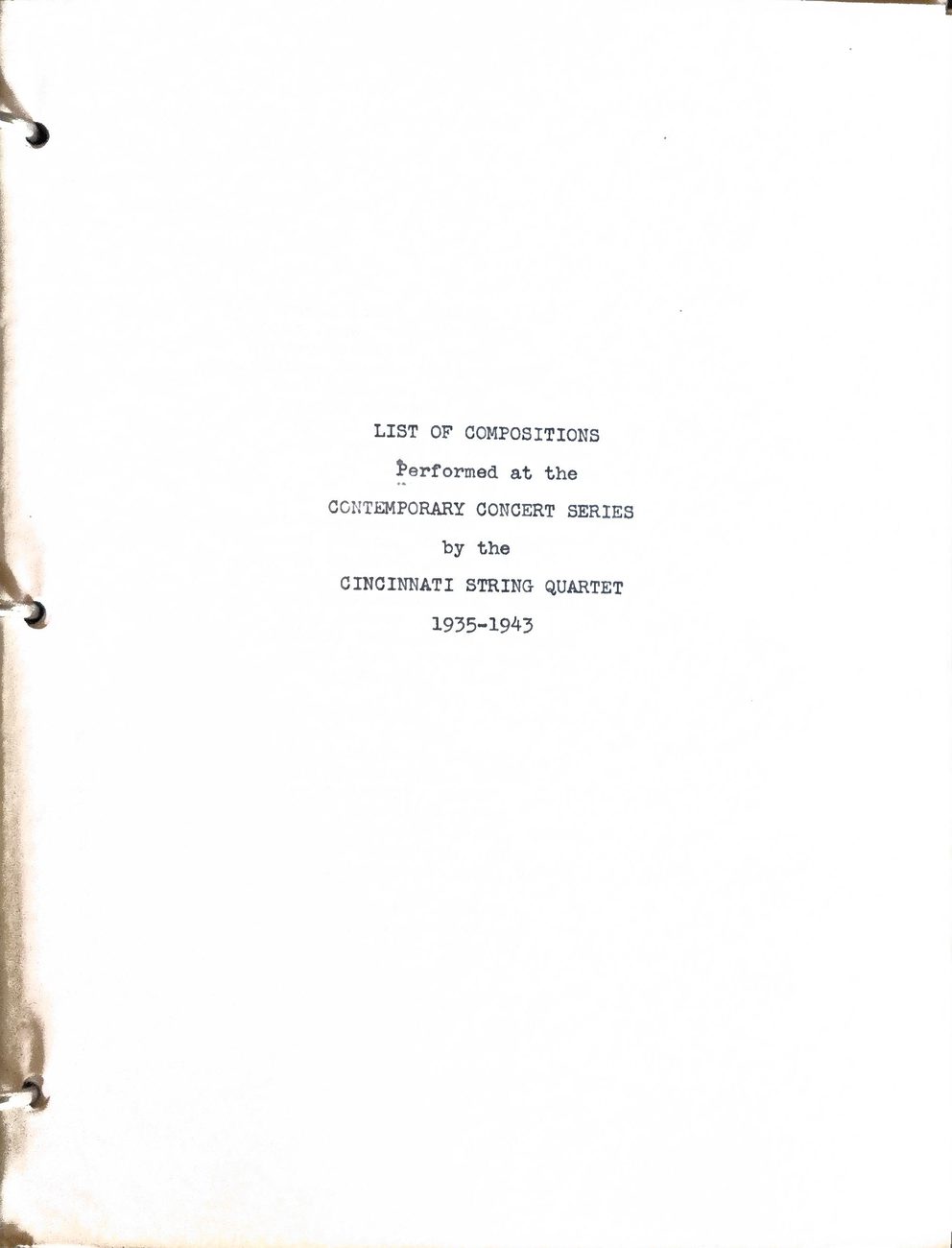
Partway through the document, a second title page appears for a distinct sub-series: "List of Compositions Performed at the Contemporary Concert Series by the Cincinnati String Quartet, 1935–1943." This is arguably the most interesting single fact in the whole document — Helene wasn't just hosting standard-repertoire chamber concerts, she was running a dedicated new-music series in her own home, spanning nearly a decade, with an expanded roster of winds, brass, harp, piano, and voice brought in as needed.
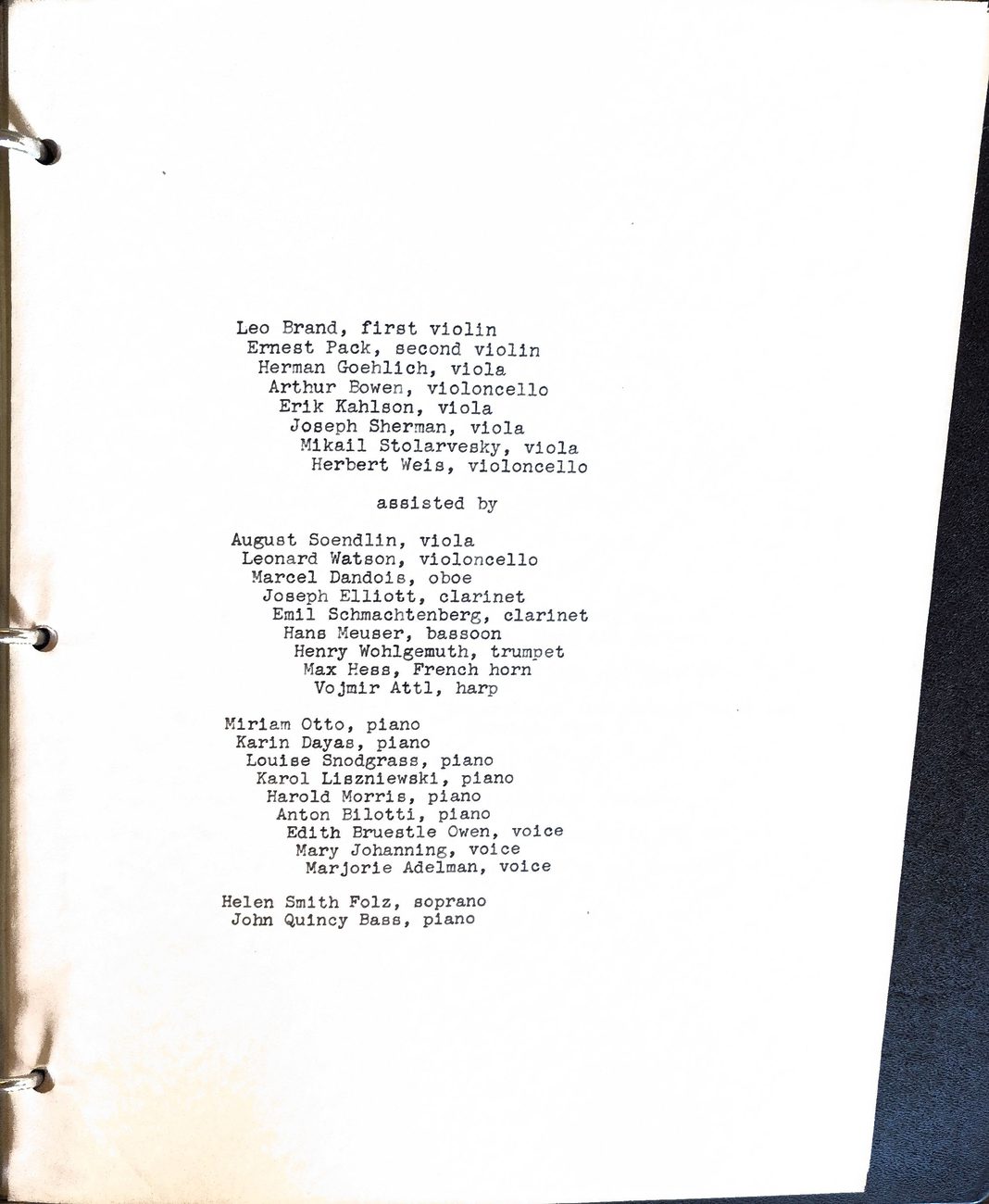
The composers represented read like a serious, internationally current new-music program for a private American home in the 1930s–40s: Béla Bartók (Quartet No. 3), Samuel Barber (Dover Beach, Op. 3), Darius Milhaud, Heitor Villa-Lobos, Bohuslav Martinů, Alfredo Casella, Jean Françaix, Gian Francesco Malipiero, Nikolai Miaskovsky, and more.
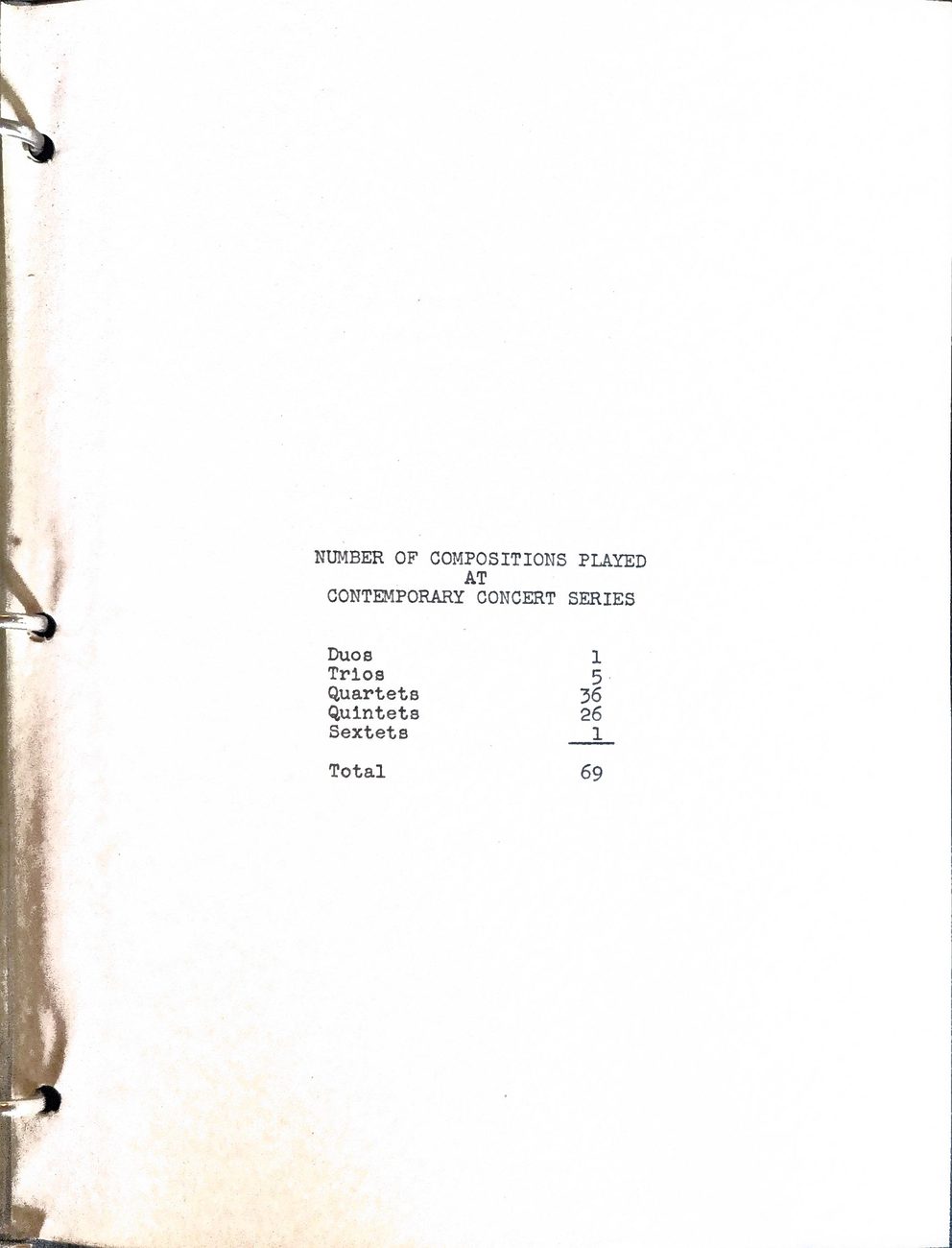
The document closes with its own tally:
Why this matters for the rest of the collection
Read alongside the sheet music itself, this document reframes some of what's in the numbered piles. The extensive Beethoven, Brahms, Bach, and Haydn holdings signed by Burton Phillips and the Wurlitzer family aren't just a personal library — a good part of it may well be performance repertoire, the actual working scores for a chamber series this active. And the pattern of hosting working musicians, feeding them a serious and adventurous program, and keeping meticulous records of it all, is the same pattern that resurfaces decades later in the Taos Foundation's residencies — just running in the other direction, artists coming to a house rather than a house's owner going to hear artists.
Sourced entirely from Helene Wurlitzer list of home performances.pdf (38 pages, not part of the numbered piles). This page summarizes and selectively reproduces it rather than transcribing it in full; the Gunther Schuller identification in particular is a plausible lead, not a confirmed fact.